
Meet Your Fellow Members
This series celebrates the people behind the profession and offers an opportunity to learn from and connect with MRTs working in a wide range of settings from coast to coast! Every Monday, we’ll introduce you to a different medical radiation technologist from somewhere across Canada.
| Know someone we should highlight? Let us know at maiello@camrt.ca |
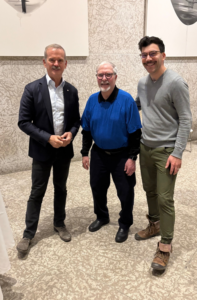
This week’s member spotlight is Jordan Veale.
- Can you describe your current role and area of practice within medical radiation technology?
I practice in a very small corner of the MRT world in didactic education. I’m currently in a dual role at my organization, Red River College Polytechnic in Winnipeg. My time is divided between two roles. As an educational assistant, I mostly help students in labs, assist with purchasing supplies and major projects, and help drive recruitment and advocacy for the program and profession. The other half of the time I spend as a didactic instructor, teaching Physics for the MRT, Seminars in Healthcare, and Foundations in Healthcare. Lately, I’ve been asked to do a significant amount of recruitment activities, hosting high school student groups, interns, open houses and career fares. The interest in our profession and demand for our program has exploded over the last year.
2. What originally led you to pursue a career as an MRT?
This may tip my hand as far as how old I am, but in high school, I was a huge fan of the TV show ER. I’m sure some folks are already giggling to themselves, but it introduced me to the prospect of a healthcare career and portrayed what turned out to be a very realistic depiction of what working in a hospital was really like. At the time, it was revolutionary, and I loved it because it didn’t pander or feel the need to simplify medical terms or procedures for the viewer. I still love it; it stands up to this day!
At the time, my hobbies essentially all revolved around gaming and modding games to improve graphics, making them more realistic, you name it. I wanted to be a graphic designer, but the program I was interested in required a portfolio submission with all sorts of mixed media art, and I wasn’t an artist; I only knew how to use computers to create things. I had to pivot and find a career that combined technology with the visual arts, and that’s when I wondered if I could find those things within healthcare.
I went researching careers online. One of my mom’s friends was an X-ray technologist, and she reached out to tell me about the profession. I checked out the program at Red River College Polytech, and found a career that combined that healthcare environment with technology and something to tickle that visual artistic part of my brain, and I never looked back.
3. What does a typical day look like for you in your department or clinic?
Lately, the answer to this varies wildly throughout the week, but essentially, my role on average is in labs, hands-on with students teaching physics, assisting with equipment or imaging labs, critiquing and helping students critique their work, or teaching patient care skills hands-on, while logging 10,000 steps within a few small rooms. I love being face-to-face and finding fun or memorable ways to help students understand concepts rather than memorize content.
4. What advice would you give to new MRTs entering the profession today?
Never stop learning. Find an aspect of the profession you are passionate about and learn as much about it as you can. If you are passionate about your profession, it will translate into your care. And everyone should attend a national conference at least once in their career.
5. What aspects of your work do you find most rewarding?
The most rewarding part of my job is helping students to overcome their fears and achieve what they didn’t think they were capable of, especially since I’m teaching physics!
6. What is your favourite part about being an MRT?
I love that we are a small but passionate community within healthcare. I feel fortunate to be working in the field during what I think is a real reckoning within the profession, and we are finally realizing our potential. Advocacy is my absolute favourite thing.