
Meet Your Fellow Members
This series celebrates the people behind the profession and offers an opportunity to learn from and connect with MRTs working in a wide range of settings from coast to coast! Every Monday, we’ll introduce you to a different medical radiation technologist from somewhere across Canada.
| Know someone we should highlight? Let us know at maiello@camrt.ca |
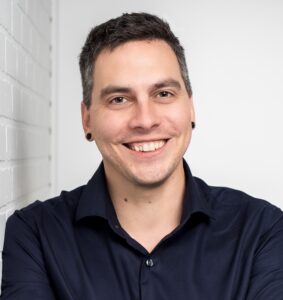
This week’s member spotlight is Vincent Dubé.
Can you describe your current role and area of practice within medical radiation technology?
I graduated as a nuclear medicine technologist in Montréal in 2005. Since then, I have worked at the CHUM and at CHU Sainte-Justine. In the later years of my clinical practice, I served as the technical coordinator for PET/CT at the CIUSSS de l’Estrie–CHUS in Sherbrooke, Québec, and I also assumed the role of assistant chief during the COVID‑19 pandemic.
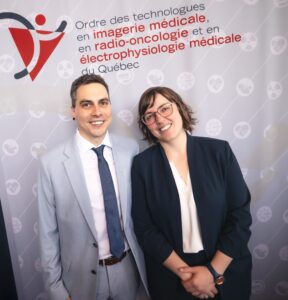
I have also been actively involved with the OTIMROEPMQ, the regulatory body for all medical radiation technologists in Québec. I first served for two years on the Inspection Committee, then was elected to the Board of Directors in 2021. In 2023, I was elected President of the Order, and I was re‑elected for a second term in November 2025. I am also chairing the Canadian National Network of Medical Radiation and Imaging Technologists for 2025-2026.
What originally led you to pursue a career as an MRT?
Like many MRTs, I was initially drawn to a career in healthcare, but I was equally fascinated by the unique combination of technology, radioactive materials, and direct patient interaction. I quickly realized that MRTs are far more than “people behind machines”: they are first-line care providers who accompany patients during some of the most significant and vulnerable moments of their healthcare journey.
When I understood that—at just 17 years old—I knew this was the profession where I wanted to build my life. The diversity of procedures in nuclear medicine also appealed to me, offering both intellectual challenge and continuous opportunities to grow. I felt confident that this career would allow me to make a meaningful difference for patients and contribute to advancing the profession.
Over time, I also discovered how deeply collaborative the field is, bringing together multidisciplinary teams to solve complex clinical questions. I appreciated how quickly the technology evolves, pushing us to stay curious and constantly learn. Most importantly, the human connections formed with patients reaffirmed that I had chosen the right path—one where science, empathy, and purpose come together.
What does a typical day look like for you in your department or clinic?
Now that I work full-time as the President of the Order, my schedule has changed significantly over the past three years. All my actions are guided by one overarching objective: the protection of the public. As President, I serve as the spokesperson for the Order and for the profession. I lead meetings, participate in major professional initiatives across Québec, and represent MRTs in all matters related to public protection. I also chair the Board of Directors and ensure that the decisions they make are implemented consistently in the daily operations of the Order.
A meaningful part of my role involves meeting MRTs in hospitals and connecting with future technologists in colleges; these interactions keep me grounded in the realities of the profession. I also collaborate closely with various regulatory partners and government bodies to strengthen safe practices and support the evolution of the field. Every day brings a different challenge—whether strategic planning, crisis management, stakeholder consultation, or outreach—and that dynamic is one of the aspects I appreciate most about my work.
What advice would you give to new MRTs entering the profession today?
Take your place! You are the specialist, and your expertise is living proof of how essential MRTs are to the healthcare system. Lead with confidence, and share your knowledge generously—every insight you offer directly benefits patients. Engage with physicians, propose ideas, and help improve practices within your department. And above all, always be there for your patients; they should remain at the heart of everything you do.
Remember that your work carries immense responsibility but also incredible impact. Stay curious, keep learning, and don’t hesitate to ask questions—this is how you grow and how the profession evolves. Build strong relationships with your colleagues; collaboration is one of the pillars of safe, high‑quality care. Finally, trust yourself: you earned your place, and the future of the profession depends on your leadership, your professionalism, and your passion
What aspects of your work do you find most rewarding?
What I find most rewarding in my work is the time spent with patients and the moments where I can truly make a difference for them. When you start an exam and see a patient who is stressed, anxious, or overwhelmed, and by the end they leave with a smile or visibly more at ease—you know you’ve done something meaningful. It’s deeply satisfying to feel that, beyond producing high‑quality images, you’ve helped someone feel safe, informed, and cared for.
There’s also a special pride in knowing that you applied the right technique, chose the best protocol, and performed an optimal examination that will support an accurate diagnosis. That combination of human connection and technical excellence is unique to our profession.
For me, those interactions—those small but powerful human moments—are what stay with you long after the workday ends. They remind you why the profession matters and why MRTs play such a vital role in healthcare.
What is your favourite part about being an MRT?
My favourite part about being an MRT is simply being able to say that I am one. We work incredibly hard to earn our place in this profession, and MRTs play such a unique and essential role in patient care. There is a deep sense of pride in knowing that our expertise, our technical precision, and our compassion directly contribute to a patient’s health and peace of mind.
Sometimes I wish MRTs felt that pride more strongly. Our profession faces challenges—recognition issues, staffing shortages, difficult working conditions—but despite all of that, we continue to stand strong. We show up, we adapt, we innovate, and we support one another. That resilience is something truly special.
Being an MRT means belonging to a profession that combines science, humanity, and purpose. And it’s up to us to keep that pride alive, to carry it forward, and to remind ourselves—and others—of the vital impact we make every day.