
Meet Your Fellow Members
This series celebrates the people behind the profession and offers an opportunity to learn from and connect with MRTs working in a wide range of settings from coast to coast! Every Monday, we’ll introduce you to a different medical radiation technologist from somewhere across Canada.
| Know someone we should highlight? Let us know at maiello@camrt.ca |
This week’s member spotlight is Paige Purcha.
- Can you describe your current role and area of practice within Medical Radiation Technology?
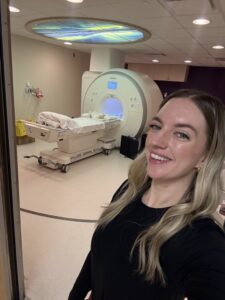
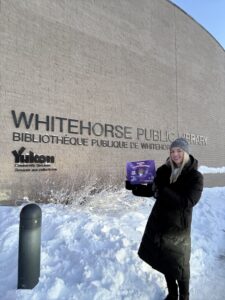
I currently work as an X-ray and MRI technologist in Whitehorse, Yukon. My role includes performing diagnostic MRI and X-ray imaging for inpatient, outpatient, and emergency department patients, as well as assisting with non-contrast CT scans. Working in a northern healthcare setting means adapting to a wide variety of patient needs, which makes the role both dynamic and rewarding.
- What originally led you to pursue a career as an MRT?
I was first introduced to the profession through my former boss, whose mom had mentioned she wanted to become an MRT. Curious about the field, I started researching it further and was immediately drawn to the combination of science, technology, and patient care. I especially appreciated that the role blends technical problem-solving with hands-on interaction while helping produce the images that support diagnosis and treatment.
- What does a typical day look like for you in your department or clinic?
No two days are the same. In outpatient X-ray, patients are usually seen on a first-come, first-served basis alongside scheduled fluoroscopy exams. In the emergency department, imaging is prioritized based on triage, and we also perform portable exams, inpatient imaging, and OR cases. MRI is typically scheduled in advance, but we also accommodate urgent cases on a needs basis. Our day also includes but is not limited to, reviewing images on PACS, stocking supplies, coordinating with other departments, and often teaching students or trainees.
- What advice would you give to new MRTs entering the profession today?
Find a mentor and stay curious. Even after more than six years in the field, I’m still learning new techniques and perspectives from colleagues. Keeping an open mind and recognizing that there are often several ways to achieve the same diagnostic result can go a long way.
I’d also encourage new MRTs to get involved in the profession beyond their day-to-day work. Volunteer, join committees, or take on roles such as a union steward. Being involved allows you to advocate for your colleagues, contribute to positive changes, and give back to the profession.
- What aspects of your work do you find most rewarding?
One of the most rewarding experiences for me is helping a claustrophobic patient successfully complete an MRI exam. Taking the time to listen and guide them through the process can make a huge difference. Knowing those images will help guide their care makes those moments especially meaningful.
- What is your favourite part about being an MRT?
I appreciate how diverse the profession is and the many directions it can take. MRTs can work in multiple modalities and settings—from hospitals and clinics to education, research, and the sales industry. I’ve enjoyed expanding my skills into MRI, and I value being able to continue learning and growing throughout my career. It’s a career that keeps you learning and adapting every day, which is part of what makes it so rewarding.