
Meet Your Fellow Members
This series celebrates the people behind the profession and offers an opportunity to learn from and connect with MRTs working in a wide range of settings from coast to coast! Every Monday, we’ll introduce you to a different medical radiation technologist from somewhere across Canada.
| Know someone we should highlight? Let us know at maiello@camrt.ca |
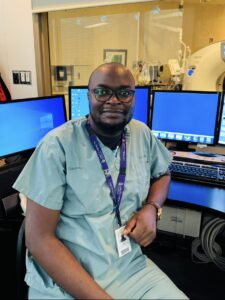
This week’s member spotlight is Collins Omae Onchere MRT (R), an internationally trained MRT, currently practising in Toronto, ON.
Can you describe your current role and area of practice within medical radiation technology?
As a Medical Radiation Technologist, my current role centers on the safe, accurate, and effective use of imaging and therapeutic technologies that utilize ionizing radiation to support diagnosis and treatment. I am primarily involved in diagnostic radiography, where I perform a wide range of X-ray and CT scan examinations. I place strong emphasis on radiation safety, applying the ALARA (As Low As Reasonably Achievable) principle to protect both patients and healthcare staff.
In addition, I have a great experience working with Computed Tomography, where I perform cross-sectional imaging procedures. This involves administering contrast media when required, closely monitoring patients during scans, and optimizing imaging protocols to achieve the best balance between diagnostic quality and radiation dose.
Overall, my area of practice is primarily clinical, working within hospital and diagnostic imaging environments where I collaborate closely with radiologists, physicians, nurses, and medical physicists to contribute to effective diagnosis and patient management.
What originally led you to pursue a career as an MRT?
I was first exposed to medical Radiation by my best friend, Mr. Bonface Ondimu (currently a senior medical sonographer in Nairobi, Kenya). We had just completed high school and relocated to the capital city to join universities when our paths crossed. At first, I really wanted to pursue Law from the University of Nairobi, but as fate would have it, it did not happen.
Bonface had just enrolled in an MRT course. After a few interactions, he convinced me to join him by facilitating my admission, and I was able to join the college towards the end of the first semester. I was also drawn to the fact that the course offered a combination of patient care, technology, and problem-solving. I liked it because we are not only supporting patients directly but also contributing critical information that helps physicians make the right decisions in the management of different conditions in patient care. As an immigrant, I had to start the whole process of certification again, from document certification, verification and approval to writing the CAMRT examinations, with the support of my best friend Ivy M, who helped me through the revision and preparation process, and also Valentina Al Hamouche MRT (R) through her weekly webinars. I was able to transition easily through the whole process. I can’t forget the moral and financial support from my family during the whole process.
How long have you been working in the profession, and how has your role evolved?
I have been working as an MRT for 13 yrs. I started out focusing on building technical skills and becoming confident with workflow and patient care. Over time, I have become more confident in handling a wide range of cases, working more independently, and supporting newer staff and students. I have also developed stronger communication skills with both patients and healthcare staff. I have also had a chance to further my skills through enrolling in different short courses and attending several continuous medical education programs.
What does a typical day look like for you in your department or clinic?
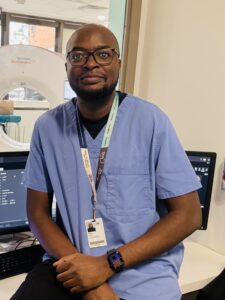
A typical day for me as a CT scan MRT, starts by preparing the scanner by doing necessary checks, reviewing the day’s patient booking and understanding the kind of examinations scheduled. I also make sure I have enough supplies for consumables, i.e., contrast media, gloves, proper gowns, etc.
Throughout the day, I am involved in patient identification and verification, reviewing requisitions and ensuring patient safety, constantly checking for contrast allergies and contraindications. I perform all the CT examinations, explain procedures properly, obtain consent from patients where necessary, select proper protocols and also provide patient care, especially to the vulnerable, including pediatrics, anxious patients and mobility-limited patients.
I also monitor patients during and after contrast injections, looking out for any adverse reactions. I also monitor patient flow from both the outpatient and emergency departments.
Finally, I also coordinate communication between the Radiologists, nurses, and fellow staff members to ensure examinations are completed urgently and properly as required.
What aspects of your work do you find most rewarding?
The most rewarding part of my career as an MRT is interacting with patients and making them feel comfortable and at ease. Most patients come in with pain, anxiety, distress, lost hope, and mental breakdown. By reassuring them, giving them hope and delivering safe and accurate imaging services makes a huge difference in their lives. It’s meaningful to know that my expertise has impacted someone’s life in a positive way.
Secondly, I enjoy the technical part of being an MRT, with continuous advancement in technology and advanced equipment, which has continuously improved my skills in imaging.
What is your favourite part about being an MRT?
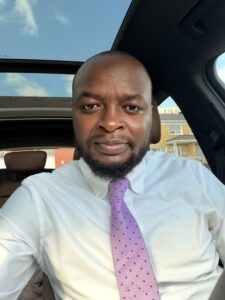
Helping and supporting patients by making them feel more comfortable during the procedures and navigating through their conditions, and also at the same time working with imaging technology and the fact that the images I produce help physicians to make accurate diagnoses has been the favourite part of being an MRT.