
Meet Your Fellow Members
This series celebrates the people behind the profession and offers an opportunity to learn from and connect with MRTs working in a wide range of settings from coast to coast! Every Monday, we’ll introduce you to a different medical radiation technologist from somewhere across Canada.
| Know someone we should highlight? Let us know at maiello@camrt.ca |
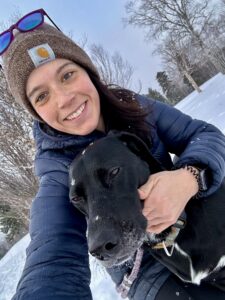
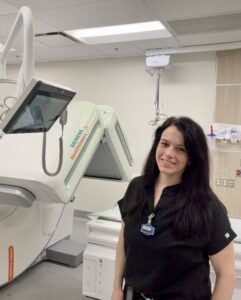
This week’s member spotlight is Sarah Bowman BHSc, MHS, MRT(NM), CTIC, from Western Memorial Regional Hospital, Corner Brook, Newfoundland.
Can you describe your current role and area of practice within medical radiation technology?
Currently, I am the lead Nuclear Medicine Technologist, site Radiation Safety Officer, and only technologist at Western Memorial Regional Hospital, in Corner Brook, Newfoundland. In this role, I manage administrative responsibilities, support day-to-day operations, oversee equipment quality control and maintenance, while also contributing to policy and procedural development. As the Radiation Safety Officer, I ensure compliance with Canadian Nuclear Safety Commission regulations within the department, while also providing direct patient care.
What originally led you to pursue a career as an MRT?
I began my post-secondary journey in 2007 pursuing a Bachelor of Science in Biology at Dalhousie University. After two years of study, I realized I wanted to pursue a career in healthcare but felt that nursing was not the right fit for me. Through further research, I discovered the School of Health Sciences at Dalhousie University and applied to the Nuclear Medicine program. Once I began the program, I fell in love with nuclear medicine for its unique ability to bridge compassionate patient care with advanced chemistry, physics, sophisticated technology, and direct patient interaction. After graduating from Dalhousie in 2013, I have prioritized volunteering and continuing education, expanding my scope of practice by cross-training in computed tomography, volunteering with CAMRT and CAMRT-ATL, and recently completing my master’s degree.
What does a typical day look like for you in your department or clinic?
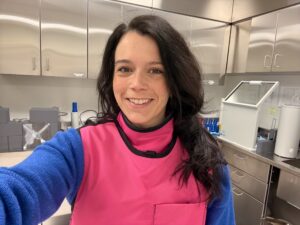
Currently, I am the only technologist at my site, as nuclear medicine is experiencing a shortage of technologists not only in Newfoundland but across Canada and beyond. This shortage means that days can be unpredictable as I balance the many roles required to keep the department functioning. A typical day begins with performing quality control (QC) on equipment, followed by radiopharmacy duties involving the preparation and QC of radiopharmaceuticals, and finally interviewing, injecting, and imaging patients. At the end of the day, my priority is always to provide high-quality, compassionate patient care while maintaining radiation safety and balancing administrative responsibilities.
What advice would you give to new MRTs entering the profession today?
Firstly, I would encourage new graduates to never lose their sense of pride and passion for why they entered the healthcare field. Being an MRT is a rewarding profession that allows us to make a meaningful impact on the lives of patients every day. To foster this sense of achievement in their profession and role in patient care I would encourage them to commit to lifelong learning, volunteering, and participating in professional opportunities such as the Leadership Development Institute through the CAMRT.
Secondly, I would encourage them to remember the importance of balance. Healthcare, now more than ever, is a challenging field, and maintaining a healthy work-life balance is essential. Prioritizing your well-being not only supports your mental and physical health, preventing burnout, but also allows you to provide compassionate, safe, and high-quality care to your patients.
What aspects of your work do you find most rewarding?
The most rewarding aspect of being an MRT(NM) is the role I play in a patient’s journey, from some of their most devastating moments to celebrating milestones such as their final follow-up exam after completing chemotherapy. As an MRT, I have the privilege of providing comfort, being a shoulder to cry on, and supporting patients throughout their experiences. I take great pride in offering that compassion alongside my expertise as a nuclear medicine technologist, ensuring patients feel supported, informed, and cared for throughout their healthcare journey.
What is your favourite part about being an MRT?
My favourite part of being an MRT is witnessing the rapid technological advancements and the growth of the profession, and how this progress directly enhances patient care by increasing diagnostic precision and enabling more personalized healthcare.