
Member Monday – Rachelle Martell

Member Monday – Rachelle Martell

Meet Your Fellow Members

This series celebrates the people behind the profession and offers an opportunity to learn from and connect with MRTs working in a wide range of settings from coast to coast! Every Monday, we’ll introduce you to a different medical radiation technologist from somewhere across Canada.

Know someone we should highlight? Let us know at maiello@camrt.ca

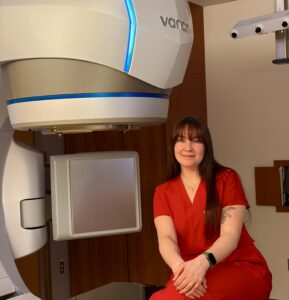
This week’s member spotlight is Rachelle Martell, RTT from Radiation Therapy, NS Cancer Center.
 

Can you describe your current role and area of practice within medical radiation technology?

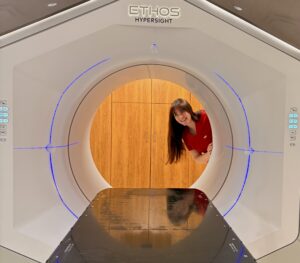
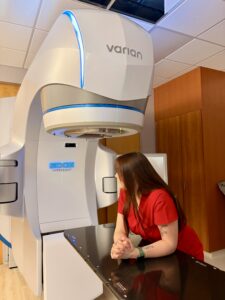
I am a radiation therapist at the Halifax cancer center and am currently the site group representative for head and neck patients and a member of various committees. I am actively working on the floor treating patients, attend monthly meetings to discuss the head and neck patient population, while simultaneously working on my quality improvement project surrounding bell ringing.


What originally led you to pursue a career as an MRT?

Haphazardly, I came across the MRT profession when I was completing a placement for my neuroscience degree at the Baycrest Hospital in Toronto. I was initially interested in becoming an MRI technician and applied for radiation therapy as a per-requisite for the MRI program. Of course, as soon as I started my career in radiation therapy I fell in love with the profession and never looked back.
 

What aspects of your work do you find most rewarding?
The patients are, without a doubt, the most rewarding part of my job. Unlike other MRT fields, radiation oncology allows me to see the same patients every day for weeks as they go through their course of treatment. This gives me the chance to build real connections and, hopefully, make their journey a little easier. Like many MRTs, I’ve met some of the most inspiring and interesting people throughout my career. I find the greatest satisfaction in bringing moments of levity to what is often one of the most challenging experiences in someone’s life. My number one priority is making a patient laugh!
Can you tell us a bit about your research, which currently focuses on bell-ringing practices in cancer treatment and how these traditions are perceived by patients and clinicians? 
My current quality improvement project focuses on the tradition of bell ringing within cancer care. Patients are typically given a physical bell to ring at the end of a course of treatment (radiation or chemotherapy) which is intended to symbolize the completion of a milestone. Currently, few studies have explored patient and clinician perspectives on bell ringing. My project surveyed both groups to assess whether ringing the bell remains the most appropriate way to mark the end of treatment. The findings showed that a minority of patients prefer not to participate and would rather not see or hear others ring the bell. This preference was largely linked to the negative associations the sound holds for patients whose cancer journey is ongoing.

You were selected as a Journal Academic Mentorship program presenter at CAMRT2026. What can attendees look forward to hearing you discuss?

I was honoured to be one of the women selected for the Journal Academic Mentorship (JAM) program by CAMRT. The core goal of this mentorship program is to address the gender gap in publication, a cause I am particularly passionate about. Through this initiative, I was matched with an exceptional mentor who has guided me through the publication process and supported my development as a writer and researcher. I will be presenting the findings from my quality improvement project about bell ringing at this years CAMRT conference. Attendees can look forward to hearing deeply moving quotes from our patients, clinician perspectives, and even some alternatives to bell ringing!

Are there any future research areas or initiatives you’re excited to explore?
I have a particular interest in research that has a significant impact on the patient experience. I believe quality improvement should be at the forefront of cancer care, and I am always striving to provide the most patient-centered care possible. The result of the bell project will be a new interactive art installation for all future patients to appreciate; this is the kind of work I am passionate about. Any future projects I do will have the patient experience at the forefront!