

Meet Your Fellow Members
This series celebrates the people behind the profession and offers an opportunity to learn from and connect with MRTs working in a wide range of settings from coast to coast! Every Monday, we’ll introduce you to a different medical radiation technologist from somewhere across Canada.
| Know someone we should highlight? Let us know at maiello@camrt.ca |
This week’s member spotlight Deepinder Kaur Bassi.
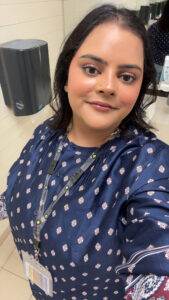
- Can you describe your current role and area of practice within medical radiation technology?
I am currently a second-year Diagnostic Imaging Technology student specializing in MRI, while also working as a Technologist Assistant in the CT/X-ray department at Lakeridge Health. In my role, I work closely with technologists and assist with patient preparation, transportation, room turnover, infection control, and IV insertions as part of my training. Working in CT while studying MRI has been especially valuable because it allows me to connect what I learn in the classroom with real clinical practice and gain exposure to a fast-paced diagnostic imaging environment.
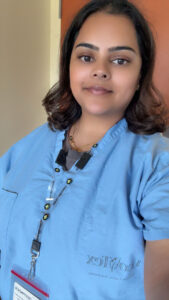
- What originally led you to pursue a career as an MRT?
I was drawn to medical radiation technology because it combines healthcare, advanced technology, anatomy, and direct patient interaction. I have always been interested in understanding the human body, but I also wanted a career where I could apply that knowledge in a practical and meaningful way. MRI particularly interested me because of its complexity and the critical thinking required to understand imaging sequences, pathology, anatomy, and image quality. Knowing that medical imaging plays such an important role in diagnosis and treatment also made the profession very appealing to me.
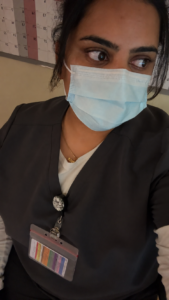
- What does a typical day look like for you in your department or clinic?
A typical day in CT is fast-paced and can change very quickly depending on patient volume and urgency. I work alongside CT technologists to help maintain an efficient workflow by preparing and transporting patients, assisting with room turnover, maintaining infection-control practices, and performing IV insertions within my training. I also interact with patients throughout their visit, which has taught me the importance of clear communication and reassurance. Every shift is different, so teamwork, organization, and adaptability are essential.
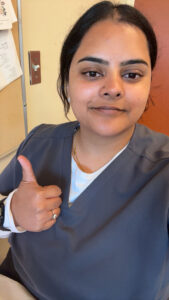
- What advice would you give to new MRTs entering the profession today?
My advice would be to remain curious and always be willing to learn. Ask questions, accept constructive feedback, and take advantage of opportunities to learn from experienced technologists because clinical experience teaches you things that cannot always be learned from a textbook. I would also emphasize that technical skills and patient care are equally important. Behind every diagnostic image is a patient who may be anxious, uncomfortable, or vulnerable, so compassion, communication, and professionalism should always remain a priority.
- What aspects of your work do you find most rewarding?
The most rewarding aspect for me is knowing that I can positively influence a patient’s experience, even through small interactions. Something as simple as explaining what to expect, listening to a patient’s concerns, or providing reassurance can make them feel more comfortable. I also find it rewarding when concepts I have learned in school, such as anatomy, pathology, imaging physics, and patient care, come together in a real clinical setting. It makes the purpose behind what I am learning much more meaningful.
- What is your favourite part about being an MRT?
Although I am still a student working toward becoming a registered MRT, my favourite part of the profession is the combination of technology, critical thinking, and patient care. I particularly enjoy understanding the reasoning behind imaging protocols rather than simply following a set of instructions. MRI especially interests me because changing different imaging parameters can significantly affect the information demonstrated on an image. I look forward to developing that knowledge further and eventually using it to produce high-quality diagnostic images while providing compassionate patient care.