
Meet Your Fellow Members
This series celebrates the people behind the profession and offers an opportunity to learn from and connect with MRTs working in a wide range of settings from coast to coast! Every Monday, we’ll introduce you to a different medical radiation technologist from somewhere across Canada.
| Know someone we should highlight? Let us know at maiello@camrt.ca |
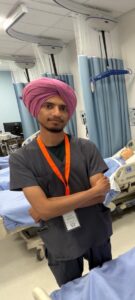
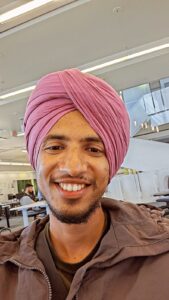
This week’s member spotlight Karanbeer Singh.
- Can you describe your current role and area of practice within medical radiation technology?
I’m currently a student in the Diagnostic Medical Imaging Technology program at Sheridan College, so my practice is mostly on campus! My main focus right now is mastering cross-sectional anatomy, clinical pathology, and imaging workflows. Over the summer, I volunteered as a Clinical Lab Assistant, where I collaborated with our faculty to help run student simulation labs so my peers could safely practice their clinical competencies. More recently, I’ve been helping our program coordinators set up the spaces for new imaging equipment to get the labs ready for the start of the fall term. Now, I’m also shifting my focus toward my role as the Cohort 1 Student Representative on our Program Advisory Committee.
- What originally led you to pursue a career as an MRT?
I always knew I wanted a healthcare career where I could make a direct, meaningful impact on patients’ lives, and I was looking for the most dynamic and efficient way to do that. Medical radiation technology stood out as the perfect path. I’ve always been super fascinated by the brain and how we can actually see inside it using technology like CT and MRI. When I started reading about neuroimaging and stroke pathophysiology, I was completely hooked. It even inspired me to start a Substack where I write about these medical imaging concepts just to wrap my own head around the physics. Becoming an MRT felt like the absolute best way to blend my nerdy love for advanced imaging technology with a career that actively helps people.
- What does a typical day look like for you in your department or clinic?
As a student, my day-to-day is a big mix of studying and hands-on preparation. A typical day usually involves grinding through cross-sectional anatomy and clinical pathology flashcards. With the new term starting, I’ve also been spending time helping faculty get the lab spaces set up for incoming students and preparing to assist with the upcoming Student Orientation. Outside of classes, I write articles for my Substack or chat with my mentors. I also just wrapped up an amazing one-week observational placement as an MRI Research Observer at the Rotman Research Institute at Baycrest this August, which was a huge highlight of my summer!
- What advice would you give to new MRTs entering the profession today?
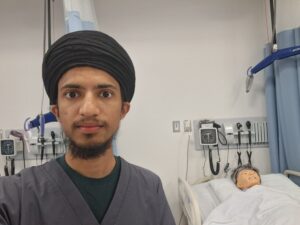
Since I’m still a student myself, the best advice I can share is to get involved in the MRT community as early as you can. Joining associations like CAMRT or OAMRS and signing up for things like their advocacy programs completely changed my perspective. Don’t be afraid to reach out to senior technologists or your professors for mentorship. Building those connections makes the heavy coursework feel a lot less overwhelming.
- What aspects of your work do you find most rewarding?
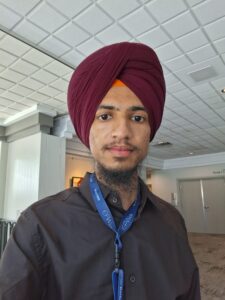
The collaborative side of things. Whether it was helping my classmates nail down their clinical competencies during my time volunteering in the simulation labs or rolling up my sleeves alongside my peers to help faculty get the lab spaces ready for the start of the term, being part of this community is incredibly rewarding. I also love diving deep into the research side, like learning about portable bedside MRI systems or photon-counting CT detectors and then sharing those through my writing.
- What is your favourite part about being an MRT?
My absolute favourite part is the community and the endless learning. This past May, I travelled to Victoria, BC, for the CAMRT annual conference, and I was just blown away by how welcoming and passionate everyone was. The field is always evolving, so you never really stop growing. It’s exciting to know I’m entering a profession where everyone genuinely wants to see each other succeed and provide the best care possible.