
Meet Your Fellow Members
This series celebrates the people behind the profession and offers an opportunity to learn from and connect with MRTs working in a wide range of settings from coast to coast! Every Monday, we’ll introduce you to a different medical radiation technologist from somewhere across Canada.
Know someone we should highlight? Let us know at maiello@camrt.ca
This week’s member spotlight is Mizhel Wage-Hurlock, MRT, who is currently working full-time at Insight Medical Imaging and on a casual basis at Fort Saskatchewan Community Hospital and East Edmonton Urgent Care.
Can you describe your current role and area of practice within medical radiation technology?
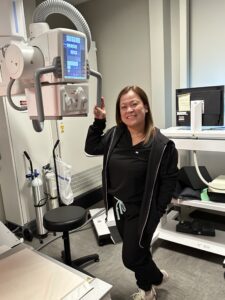
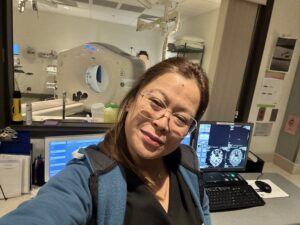
I currently serve as a Medical Radiation Technologist across several diverse clinical settings, which allows me to maintain a highly versatile practice. My primary focus is general radiography, where I support a community hospital, an urgent care clinic, and a walk-in clinic. Additionally, I’ve expanded my scope into CT imaging at the community hospital where I work casually. This multi-site rotation requires me to stay incredibly adaptable, ensuring I provide high-quality, patient-centred care whether I’m in a high-volume trauma center or a more specialized community setting.
What originally led you to pursue a career as an MRT?
My journey into Medical Radiation Technology was sparked by a personal turning point during the births of my two sons. Navigating those experiences, I saw firsthand how much of an impact—both positive and negative—healthcare providers have on a patient’s journey. I’ve always been passionate about being a source of safety and advocacy for others, especially those in vulnerable positions. When the opportunity for a career change arose, I knew I wanted to transition into healthcare, specifically within diagnostic imaging. After shadowing at a clinic and seeing the unique blend of technology and patient interaction, I was hooked. I was fortunate to be accepted into the MRT program at NAIT on my first application, and I haven’t looked back since.
How long have you been working in the profession, and how has your role evolved?
In just two years, my practice has evolved from that of a new graduate to a multi-modality technologist. By choosing roles that offered immediate training in CT and Bone Density, I’ve been able to expand my scope of practice rapidly. This dual-focus approach—honing my efficiency in general X-ray while building specialized knowledge in advanced imaging—has allowed me to grow into a versatile and confident professional much faster than I ever expected.
What does a typical day look like for you in your department or clinic?
My daily routine spans the busy, high-volume environment of a walk-in clinic and the high-acuity, unpredictable nature of hospital work. While the two settings require different approaches, I enjoy the specific challenges of each. The fast-paced clinic environment has made me a more efficient technologist, while hospital work allows me to adapt to complex patient needs. I view every shift as a learning opportunity to further refine my skills in both general radiography and specialized imaging.
What aspects of your work do you find most rewarding?
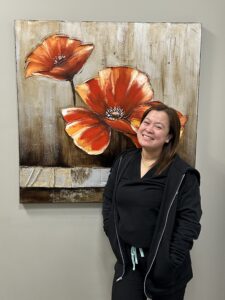
Providing high-quality, compassionate patient care is the cornerstone of why I became an MRT. I find it incredibly fulfilling to bridge the gap between complex technology and the person behind the patient gown. Receiving feedback that I am thorough and kind isn’t just a compliment; it’s a validation of the hard work I have poured into this career. Those moments of gratitude from patients are what make this profession so rewarding and remind me daily why I chose this path.
What is your favourite part about being an MRT?
What I love most about this profession is that every day is a masterclass in healthcare. Whether I’m collaborating with seasoned peers or fresh-eyed students, I find there is always something new to learn. As I continue to build my career, I look forward to that daily growth. Most importantly, I’m driven by a simple standard: providing the kind of patient care I would want for myself or my own family. Knowing I’ve met that standard is what makes being an MRT so fulfilling.
I want to add that navigating the MRT program as a mature student with a family brought its own unique challenges, but it also brought immense rewards. I want to encourage anyone considering a similar path: age is never a hindrance to self-improvement. If you feel a calling to better yourself or pivot your career, go for what makes you feel fulfilled and happy. It is never too late to start a journey that feels right.