
Meet Your Fellow Members
This series celebrates the people behind the profession and offers an opportunity to learn from and connect with MRTs working in a wide range of settings from coast to coast! Every Monday, we’ll introduce you to a different medical radiation technologist from somewhere across Canada.
Know someone we should highlight? Let us know at maiello@camrt.ca
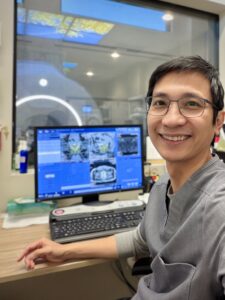
This week’s member spotlight is Tony Pham MRT (R), currently working at Central Alberta Medical Imaging Services (CAMIS), Red Deer, Alberta.
- Can you describe your current role and area of practice within medical radiation technology?
I am currently a member of CAMRT and employed as an MRT in Alberta, with a scope of practice that encompasses general radiography, interventional radiology, bone mineral density, and computed tomography. I collaborate closely with radiologists, nurses, and the broader healthcare team to ensure safe and efficient workflows while providing high-quality, patient-centred imaging services.
- What originally led you to pursue a career as an MRT?
I chose a career in medical radiation technology because of my strong interest in both technology and medical imaging. I am inspired by the way imaging enables physicians to gain insight into the human body and support accurate diagnoses. The continual advancement of imaging (becoming faster, safer, and increasingly precise) drives my ongoing commitment to professional growth and lifelong learning.
- How long have you been working in the profession, and how has your role evolved?
I graduated in 2008 and have accumulated over 15 years of experience as an MRT. I spent 13 years in Vietnam, primarily working in computed tomography and magnetic resonance, where I gained extensive experience across multiple modalities, quality control, staff training, and research collaboration. After relocating to Canada in 2022, I completed the CAMRT examination and resumed practice in 2024 as an MRT (R). Since then, my role has expanded beyond technical expertise, allowing me to further develop my skills in cross-cultural communication and adapting to Canadian healthcare standards.
- What does a typical day look like for you in your department or clinic?
A typical day of mine is dedicated to delivering safe and compassionate patient care, performing imaging examinations efficiently, and collaborating closely with radiologists and colleagues. I frequently work across multiple techniques and modalities, manage workflow effectively, and ensure the production of high-quality images while fostering a respectful and supportive experience for patients from diverse backgrounds.
- What advice would you give to new MRTs entering the profession today?
I would encourage new MRTs and students to remain curious, committed, and adaptable. Placing a strong emphasis on patient care, teamwork, and continuous learning is essential. As imaging technology continues to advance, staying current with knowledge, honing critical-thinking skills, and embracing collaborative practice will foster both professional growth and long-term success in this field.
- What aspects of your work do you find most rewarding?
The most rewarding aspect of my work is knowing that the images I produce directly contribute to accurate diagnoses and high-quality patient care. Establishing trust with patients, especially those who may be anxious or experiencing discomfort, and making meaningful contributions to the healthcare team to provide a profound sense of professional purpose.
- What is your favourite part about being an MRT?
My favourite aspect of being an MRT is working with advanced imaging technology, including AI-supported and high-tech equipment, while applying hands-on expertise to optimize image quality. I find it highly rewarding to produce diagnostically valuable images while ensuring patient safety and comfort.
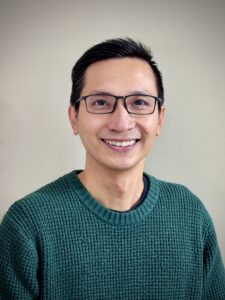
“Being an MRT allows me to blend advanced medical technology with compassion and a commitment to lifelong learning. I am proud to contribute to medical imaging in both Vietnam and Canada and to be part of a profession that positively impacts patients’ lives every day.”